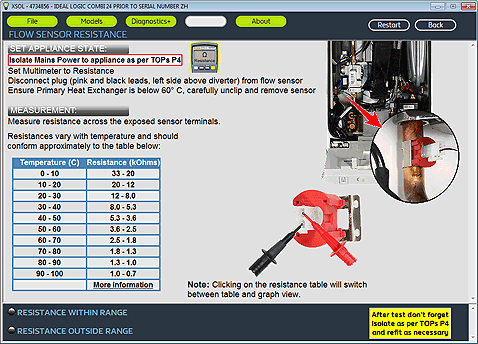
Resistance is very useful in fault finding, it is used for confirming the integrity of components such as motors or switches and for checking that thermistors are within their expected range.
The example page here shows a typical resistance check that may appear in XSol. After isolating the power the first step is to take the component "out of circuit" this must be done to ensure that the reading is not altered by any other components that may share the circuit. This is achieved by simply disconnecting the wires from either the component its self or the PCB.
Before testing the component the meter should be checked by touching the tips of the probes together, if the meter is working correctly this should show a
short circuit.
The resistance of the component is then measured by touching the multimeters probes to the terminals of the component, one probe on each terminal making sure they do no touch each other.
NOTE: It is important that you do not touch either the probe tips or component terminals while taking the reading as this could alter the test result.
The meter will then display the resistance of the component in Ohms (Ω).