GUIDANCE FOR MEASURING FLOW RATES AND TEMPERATURE RISES
None

Note:
This is only a guide and not the definitive way of performing the test.
This is only a guide and not the definitive way of performing the test.
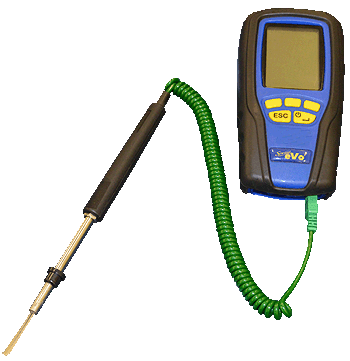
1. Attach temperature probe to the FGA and select 'Temperature differential' from the drop down options.
2. Place temperature probe under the cold tap, allow the temperature to stabilise, then make a note of the reading achieved.
3. Set the flow rate at the hot tap as per the manufacturers' specification, allow the appliance to run and the burner to ignite.
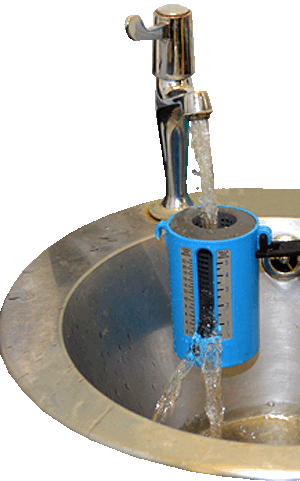
4. Place the temperature probe in the weir cup, directly in to the flow of the water, monitor the temperature and allow it to stabilise.
5. Once stabilised, make a note of the reading achieved. Subtract the cold water temperature from the hot water temperature - This figure is the 'Temperature rise'
2. Place temperature probe under the cold tap, allow the temperature to stabilise, then make a note of the reading achieved.
3. Set the flow rate at the hot tap as per the manufacturers' specification, allow the appliance to run and the burner to ignite.
4. Place the temperature probe in the weir cup, directly in to the flow of the water, monitor the temperature and allow it to stabilise.
5. Once stabilised, make a note of the reading achieved. Subtract the cold water temperature from the hot water temperature - This figure is the 'Temperature rise'
Instructions
Note:
Alternatively you may wish to use temperature clamps, but as it is not always possible to get access to the cold water inlet and hot water outlet pipes under the appliance, it is easier to use the method stated above.
Alternatively you may wish to use temperature clamps, but as it is not always possible to get access to the cold water inlet and hot water outlet pipes under the appliance, it is easier to use the method stated above.
The flow rate is set correctly once the water flowing through the weir cup has reached the level on the scale as stated in the MI's.